Exploration as Relationship:
Native Youths’ Explorations With Digital Technologies For Storytelling
Purpose + Background
What has historically defined Native youths’ relationship to digital technologies?
Imbued values within Western technologies of timing, pacing, and relationship (Benjamin, 2019).
Being aware of these historical harms when working with Native youth is important.
Centering Storytelling and Exploration
Indigenous acts of storytelling can be centered in our educational interactions with digital technologies.
Storytelling is intimate and sacred; stories carry Indigenous values and histories. It is an enactment of sovereignty and self-determination (Brayboy, 2005).
Harms of data misrepresentation, abuse, exclusion, and access (Dalton, 2002; Drabiak-Syed, 2010).
The dismissal of their cultural, technological and rhetorical sovereignties (Morgan et al., 2025).
Storytelling is capable of healing and promoting the well-being and self-determination of Native youth, especially as they (re)story (Morgan et al., 2025).
Storytelling is vital for cultural revitalization and sustainment (McCarty & Lee, 2014).
We examine the healing potential of storytelling for Native youths’ relationship with digital technologies by centering the act of exploration.
Research Question:
How does exploration support Native youths’ relationship with digital storytelling technology?
The space between (Aoki, 1991; Hogue, 2019; Tuck, 2009)
Exploration exists as the space between ideas, where youth are determining what stories to tell and experimenting directly with digital storytelling technologies.
Methodology: Community-driven research process (Quayle et al., 2023) with Native Education program coordinators, tribal knowledge holders, educators, designers, and technologists.
Data Collection: Indigenous youths’ earliest explorations with digital storytelling technologies from workshops held between June 2024-February 2025. Indigenous youth used Procreate, iMovie, and Polycam.
Data Analysis: Qualitative coding (Saldana, 2013) that separated explorations into:
Initial types
How exploration facilitated connection
Findings
Explorations facilitate Native youths’ connections with themselves, their connections to others, their connections to their culture, and their connections to land.
Example: Explorations with time through digital storytelling technologies, like taking slow motion videos, facilitated connection to land as students captured wind blowing through the tall grass.
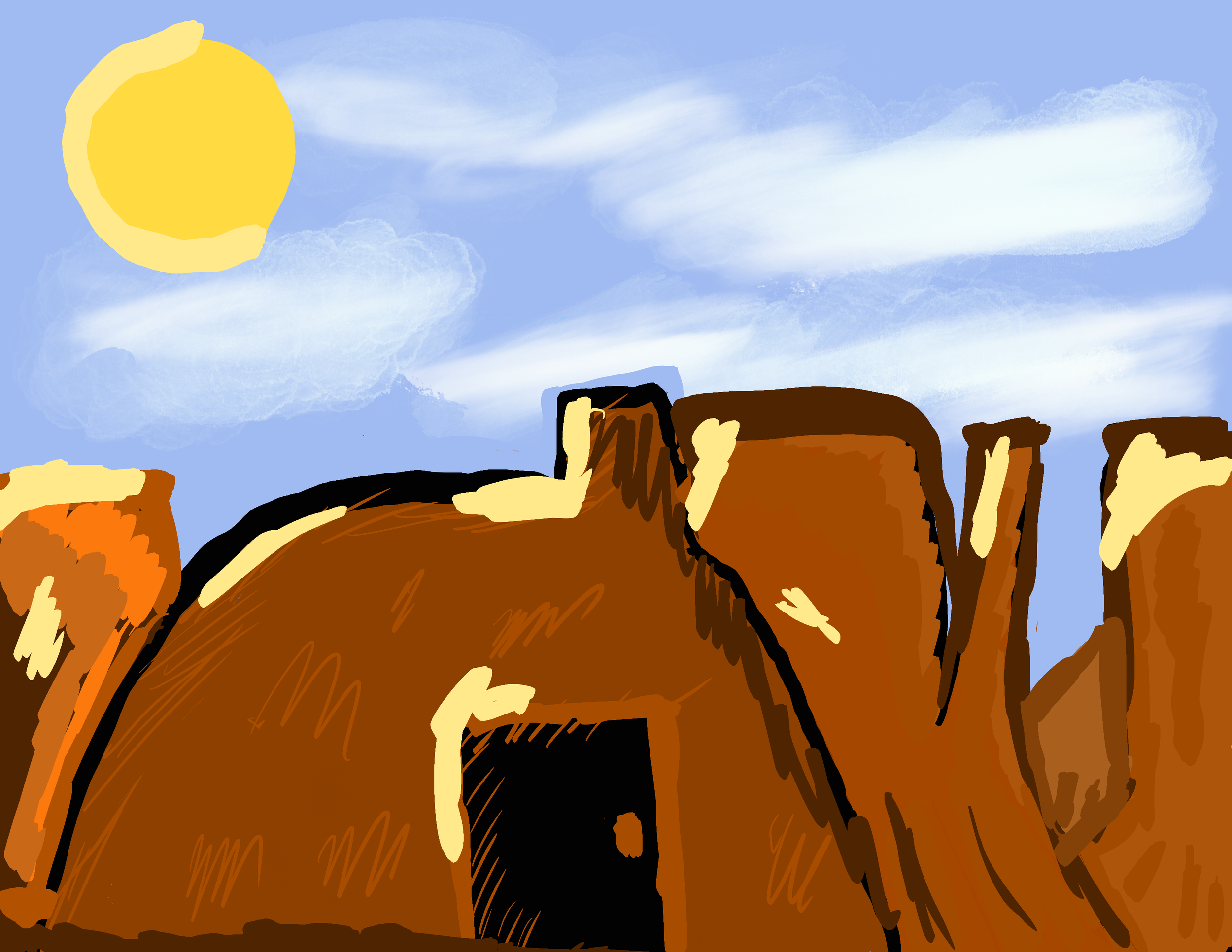
Example: Explorations with visual elements, like playing with brush colors and textures and employing photography principles (like perspective and composition), facilitated connection to the land and culture as students took photos of landscapes, animated sunsets, and drew a family hogan.
Example: Explorations with sound facilitated connections to self and culture, as students recorded their own narrations of stories and integrated Powwow music.
Example: Explorations with people facilitated youth’s relationship with themselves, their peers, and their cultures, as students interviewed their friends about Powwows or middle-school survival tips.
We are thankful to the youth participants who chose to share their stories with us. We also express our gratitude to the CLASP Collaborative, who continues to offer intellectual, relational, and spiritual support for this work.This material is based upon work supported by the National Science Foundation under Grant No #1943630. Any opinions, findings, and conclusions or recommendations expressed in this material are those of the author(s) and do not necessarily reflect the views of the National Science Foundation.